
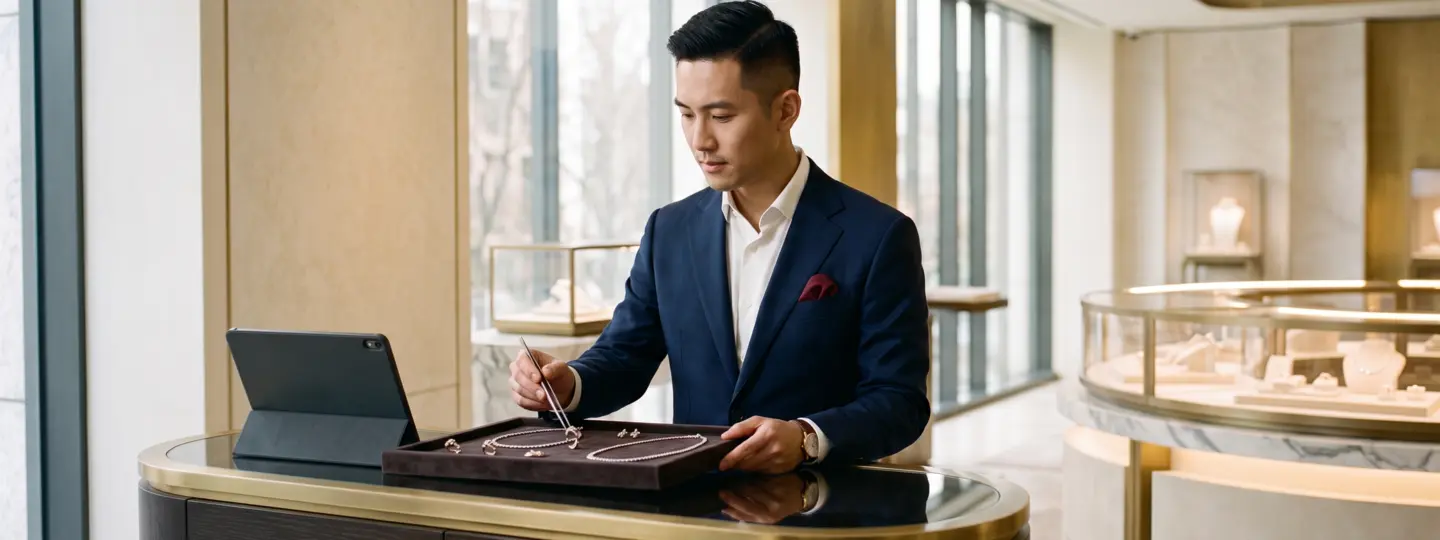

Luxury brands have invested heavily in clienteling. CRM platforms, profiling apps, advisor training. The tools are there. But in most boutiques, advisors still improvise on the majority of client visits because nobody structured the interaction before the client arrived. Clienteling doesn't fail because of bad solutions. It fails when the advisor has no context at the door.
Clienteling is the practice of building one-to-one relationships between a client advisor and a customer, anchored in personal knowledge: purchase history, style preferences, occasion context, relationship depth. In luxury, it's the baseline expectation. Not a nice-to-have.
But clienteling is not a software category. It's a discipline. The CRM stores data. The clienteling app surfaces it. Neither produces the client interactions that generate the data in the first place.
That's the gap most brands overlook. They invest in profiling tools and skip the question that matters most: do your advisors know who's walking in tomorrow, and why?
A premium jewelry maison with 30 boutiques. Salesforce deployed, clienteling app running, advisors trained quarterly. On paper, the infrastructure looks solid.
Then 70% of daily traffic walks in without an appointment. The advisor at the door has nothing: no visit motive, no product interest, no advisor preference, no profile pulled up. The conversation starts cold. The CRM captures the transaction afterward, but the clienteling opportunity was already gone before the client crossed the threshold.
The 30% who booked ahead get a different experience. Their advisor reviewed the profile that morning. Products were pre-selected. The conversation picks up where the last visit left off. It feels personal because it was prepared.
The difference between these two experiences has nothing to do with CRM quality or advisor talent. It comes down to one thing: was the visit prepared, or wasn't it?
When clients book appointments, the boutique gets their intent before they arrive. Preferences, occasion, preferred advisor. When they walk in unannounced, the boutique gets nothing until the conversation starts. Clienteling depends on knowing before serving. Appointments are how you know.
Not every client will book, and in luxury you don't put a booking gate at the door. The point isn't to force the 70% to schedule. It's to stop treating the walk-in as unknowable. The same infrastructure that prepares a booked visit can recognize a client the moment they arrive: a self-check-in that routes them to the right advisor, a profile that surfaces on a tablet, a VIC flag that fires before the conversation starts. Booking prepares the visits you can. Recognition stops you losing the ones you can't.
When a Dior client books a consultation, the boutique knows who's coming, why, and which advisor they trust. The meeting starts with recognition.
When the same client walks in unannounced, the boutique has 10 seconds to figure out whether they're a first-timer or a VIC. Everything the advisor does from that point is improvisation. Past purchase data exists somewhere in the system. The advisor may not have it pulled up. The client's reason for visiting is unknown until they say it.
That recognition gap is what separates clienteling that performs from clienteling that exists on paper.
A booked visit gives the advisor three things a walk-in never will:
Context before arrival. The visit motive (birthday gift, new collection interest, after-sales need), declared preferences (size, budget range, occasion), and visit history. All of this reaches the CRM and clienteling app before the advisor says a word.
Preparation time. Products pre-selected. Notes reviewed. The conversation starts at the right place instead of starting over.
Continuity. Each booked visit builds on the last. The client profile gets richer with every interaction, because the advisor captures structured data every time. Walk-ins generate transactions. Appointments generate relationships.
Different appointment types in luxury retail reveal different things about the client.
Personal shopping and private styling produce the richest data: style preferences, budget signals, advisor affinity, cross-category interest. We've seen private styling in luxury footwear reach 95% conversion with an average basket between €3,000 and €3,500. That doesn't happen without preparation on both sides.
In-store and virtual consultations capture product-level interest and extend clienteling beyond the boutique floor. A virtual consultation gives a Hong Kong client the same advisor relationship as a Paris regular.
VIP events and masterclasses generate engagement data the CRM wouldn't capture from transactions alone. A client who attends three fragrance masterclasses in six months is signaling something. That signal only exists because the interaction was structured.
Click-and-fit appointments connect online browsing to in-store relationships. The client selects products online, books a fitting, arrives with intent. The advisor gets a product shortlist before the visit starts.
After-sales services are the most underused clienteling moment. Research shows 52% of consumers make an additional purchase after a positive after-sales experience. A repair appointment isn't a cost center. It's a loyalty trigger.
Every one of these appointment types feeds data into the clienteling stack through native integrations with the CRM and retail tools the brand already uses. Without appointments, the CRM only sees what happened. With them, it knows what's about to happen.
This is the part most stacks miss. A CRM stores what happened. A clienteling app surfaces it. Neither creates the moment that generates the data. That's the slot Booxi fills: the layer that structures the interaction before it happens, then feeds the context into the tools you already run. Not another clienteling tool. The layer that produces what they store.
Clienteling compounds. Each booked visit feeds the next one.
First, appointments acquire new clients with context. A first-time client who books a consultation shares intent, preferences, and contact data before arriving. The relationship starts with information, not guesswork.
Second, prepared visits convert better. The advisor is ready. The conversation is relevant from the first sentence.
Third, post-purchase appointments (after-sales, events, new collection previews) bring clients back and deepen the profile. Each return visit adds a layer of knowledge that makes the next interaction more personal.
Without appointments, the default cycle is different: walk-in traffic generates transactions, transactions generate CRM entries, CRM entries sit in a database. No compounding. No continuity. The advisor starts fresh every time.
Booked visits convert at 70% on average. Unstructured walk-ins convert at under 20%. Average basket increases by 30% or more when the visit was booked. No-show rates stay under 4%.
One premium footwear maison booked 530 appointments in four months. Those appointments generated $286,000 in sales at a 61% conversion rate. 57% of the clients were new to the brand. Appointments didn't just convert existing clients better. They brought new clients in with enough context to convert on the first visit.
71% of customers expect personalized interactions, and 76% are frustrated when it doesn't happen (McKinsey). The demand for prepared visits isn't coming from brands. It's coming from clients who expect the experience to match the price point.
Most clienteling stack evaluations focus on the CRM and outreach tools. Before adding another app, ask these three questions.
Do your advisors know who's coming in tomorrow? If the answer is no, the CRM is running blind. No amount of profiling helps when the advisor discovers the client at the door. Appointment booking built for retail solves this at the source: it captures visit context at the moment of booking and syncs it with the CRM before the client arrives.
Does your booking data reach your clienteling app? A booked appointment that stays in a calendar is a missed opportunity. The visit motive, advisor assignment, and declared preferences should flow into Salesforce, Tulip, or whichever clienteling platform the brand uses, in real time, both ways.
Can a VIC book and be recognized without the advisor intervening manually? When a Very Important Client books, the system should flag the visit, assign the preferred advisor, and trigger preparation. If that routing depends on an advisor remembering who the client is, it's not clienteling. It's luck.
The brands that win at clienteling won't be the ones with the best CRM. They'll be the ones whose clients never have to repeat themselves, because every visit was prepared before they arrived.
Clienteling isn't a data problem. It's a preparation problem. Structure the visits, and the data follows.
Clienteling is the practice of building long-term, one-to-one relationships between client advisors and customers, grounded in personal knowledge: purchase history, preferences, lifestyle context, relationship depth. In luxury, it means recognizing a client before they speak, preparing for their visit in advance, and continuing the relationship between visits. The goal is to make every interaction feel like a continuation of one ongoing conversation.
Appointment booking captures client context before the visit: visit motive, preferred advisor, product interest, declared preferences. This data flows into the CRM and clienteling app, giving advisors time to prepare. The shift is from reactive service (advisor improvises at the door) to prepared service (advisor knows who's coming and why). Brands using structured booking report conversion rates above 60% on booked visits, compared to under 20% on walk-ins.
CRM is the technology that stores client data: purchase history, contact information, interaction logs. Clienteling is the practice of using that data to build personal relationships. A brand can have a CRM without doing clienteling (data exists but isn't used), and it can do clienteling poorly with a strong CRM (data exists but advisors don't have it when they need it). The missing piece is often appointment booking: the system that structures visits and feeds context into the CRM before the client arrives.
Two types of data drive clienteling. Transaction data (purchase history, spend patterns) comes from the POS and CRM. Visit data (why the client is coming, what they're looking for, which advisor they prefer) comes from appointment booking. The combination creates a complete profile. Transaction data tells you what a client bought. Visit data tells you why they came, what they need next, and how they want to be served.
The most common types are personal shopping, private styling, in-store and virtual consultations, VIP events, masterclasses, click-and-fit (try-on booked online), and after-sales appointments. Each generates different data: styling reveals preferences and budget, events reveal engagement patterns, after-sales reveals loyalty depth. The key is that every booked visit adds to the profile the advisor reads before the next one.
More To Explore
How Retail Appointments Improve Customer Experience in 2026

3 reasons not to overlook the queuing experience during peak season
%20(1).webp)
Queue Management System: The Key to a Frictionless In-Store Experience