
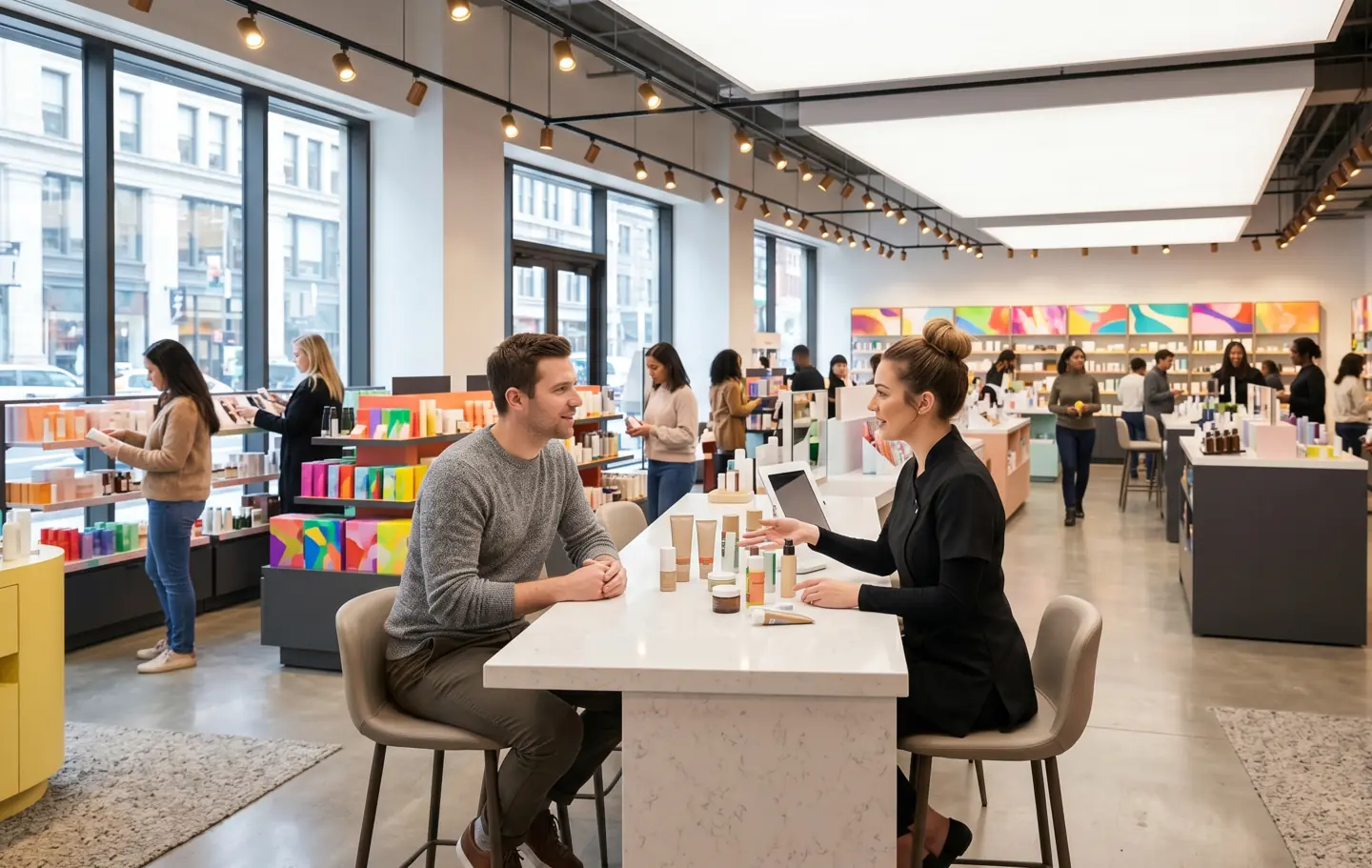

Consumers now expect one-on-one in-store appointments, not as a perk, but as a baseline. That expectation is redefining how retail operates. Scheduled retail appointments improve the customer experience from every angle: addressing wait-time frustration, enabling personalized shopping in store, building loyalty, and driving sales performance.
Whether you manage a flagship or a multi-location retail network, appointment scheduling is the mechanism that turns consumer expectations into measurable results.
The retail sector shifted after 2020, and it hasn't shifted back. Consumers now approach in-store shopping with expectations shaped by online shopping: they want convenience, predictability, and personalization before they even step through the door.
The appointment scheduling software market has grown significantly in recent years, a clear industry signal that retailers are responding. Appointment shopping is no longer a niche service for luxury boutiques. It has become a standard expectation across retail formats, categories, and consumer segments.
Today's shoppers want to feel valued, not processed. Consumers are far more likely to purchase when brands offer personalized experiences: 75% say they're willing to spend more when they receive high-quality in-store service. Today's shoppers bring digital-first expectations with them: frictionless booking, zero wait, and a shopping appointment built around them.
The gap between what consumers expect and what a typical walk-in experience delivers is widening. Retailers that close that gap through scheduled, personalized visits are the ones converting browsers into buyers.
What started as a safety protocol became a preference. The pandemic normalized appointment-based retail visits, and consumers discovered the difference a scheduled visit makes: no waiting, no uncertainty, no wasted trip. Today, shoppers are significantly more likely to book an appointment than they were before 2020.
Appointment booking has moved from workaround to expected service, and retailers who treat it as optional may be leaving future revenue and customer loyalty on the table. That shift in expectations is another reason why wait times have become one of retail's most pressing CX challenges.
Wait times are one of retail's most damaging CX problems, and the data makes it easy to see why. The numbers tell a clear story: 80% of shoppers won't enter a store with a visible queue, and 40% will choose a competitor rather than wait.
Consumers now prefer scheduling an appointment to standing in line without a defined end point. By replacing unpredictable queues with a confirmed arrival time, retail appointments give customers control over their time before they walk through the door. For a deeper look at the financial cost of unmanaged wait times, see Retail Under Pressure: 20 Hard Truths.
Long waits don't just frustrate customers. They lose them. 73% of customers walk away after waiting just 5 minutes, and 32% stop shopping at a brand entirely after a single poor waiting experience, making every unmanaged queue a direct and compounding revenue drain (Source: Booxi, Retail Under Pressure, 2025).
The financial cost is immediate; the reputational cost compounds. Most consumers actively avoid businesses with lines, which means a poor wait-time experience reduces not just today's spend but future visits and brand loyalty over time. Higher foot traffic means nothing if the in-store experience drives customers away before they reach the register.
How long customers wait matters less than how that wait feels. Research shows that customers who wait shorter than expected report substantially higher satisfaction.
Appointments provide exactly that: a confirmed slot that sets a clear, manageable expectation, so customers arrive feeling prepared rather than frustrated. That shift, from waiting to be served to arriving for a visit, delivers a more positive interaction from the first moment.
It's a better start to the experience, and a better start is what retailers need to provide if they want conversion to follow.
Personalization is where retail appointments go beyond convenience and become a loyalty driver. When a customer books an appointment, staff can prepare: reviewing purchase history, noting preferences, pulling relevant products before the visit begins. That preparation creates a consultative, one-on-one experience that walk-in traffic can't replicate.
80% of consumers are more likely to purchase when brands offer personalized experiences, and a vast majority say they're willing to share personal data in exchange for that personalization. The appointment format gives retailers the structure to collect that data at scale and act on it, turning first-time visitors into lasting customer relationships. For a full breakdown of how appointment data drives loyalty by vertical, see the Booxi Voice of Appointment report.
The preparation window before a scheduled visit is what separates a good interaction from a great one. Staff can review customer profiles, pull specific products, and draw on past purchase insights to align service recommendations before the customer walks in. The shift from reacting to a walk-in to preparing for a known visit turns a transactional exchange into a consultative one.
Repeated, personalized appointment experiences are where single-visit conversion becomes long-term brand loyalty. Each scheduled visit generates zero-party data: preferences, product interests, and purchase intent that staff can use in future communication. That data loop is what transforms a good visit into a lasting relationship. Companies that use appointment analytics report improved customer satisfaction and increased loyalty, showing the compounding benefits of treating appointment data as a relationship asset.
Retailers looking to boost customer engagement through appointment booking have a clear mechanism to improve every interaction over time. The same structure that builds customer relationships also shapes how staff perform, which is why appointment scheduling directly impacts in-store operations.
Retail appointments transform unpredictable walk-in traffic into structured, personalized experiences that consistently produce better outcomes. The case is clear: higher conversion rates, stronger loyalty, improved staff performance, and real operational control over how customers move through the store.
Booxi's enterprise appointment scheduling platform gives retail teams the infrastructure to turn every scheduled visit into a measurable performance lever: higher conversion, stronger loyalty, and operational control across every location in the network. For brands ready to close the gap between what customers expect and what the in-store experience delivers, Booxi's appointment scheduling solution is the starting point.
Appointments scale across store formats, from multi-location retail networks to flagship boutiques, by matching the model (one-on-one advisory, group event, or virtual consultation) to the store's service.
Retailers across categories use appointment scheduling to deliver consistent, high-quality experiences at scale.
Automated reminders, easy rescheduling options, and clear confirmation flows keep no-show rates consistently low across retailers using structured booking systems. A well-managed booking flow is one of the most reliable ways to deliver a personalized customer experience and reduce missed visits.
Each appointment generates high-quality zero-party data (preferences, needs, and purchase intent) that feeds CRM and clienteling strategies over time. Retailers that treat this data as a relationship asset can see how appointments impact customer lifetime value and improve every future visit.
Modern appointment scheduling platforms deploy within days for a pilot and under a month for a full network rollout, with straightforward integration into existing POS, CRM, and e-commerce systems. With the right platform, improved conversion, stronger brand loyalty, and better staff performance are visible from the first appointment cycles.
Retailers can offer one-on-one advisory sessions, personalized shopping appointments, product consultations, and virtual appointments depending on the store format and customer needs. The right scheduling platform supports all appointment types alongside group events and queue management within a single system.
Retail appointments connect the online and in-store experience by letting customers book through the brand's website and arrive at a prepared, personalized visit. A unified scheduling platform makes this online-to-store connection seamless across appointment booking, events, and queue management.
Most customers prefer to make an appointment online before visiting, which is why booking must be accessible through the brand's website and digital channels. Giving shoppers that convenience and control is what turns online interest into in-store conversion.
More To Explore
How Retail Appointments Improve Customer Experience in 2026

3 reasons not to overlook the queuing experience during peak season
%20(1).webp)
Queue Management System: The Key to a Frictionless In-Store Experience