
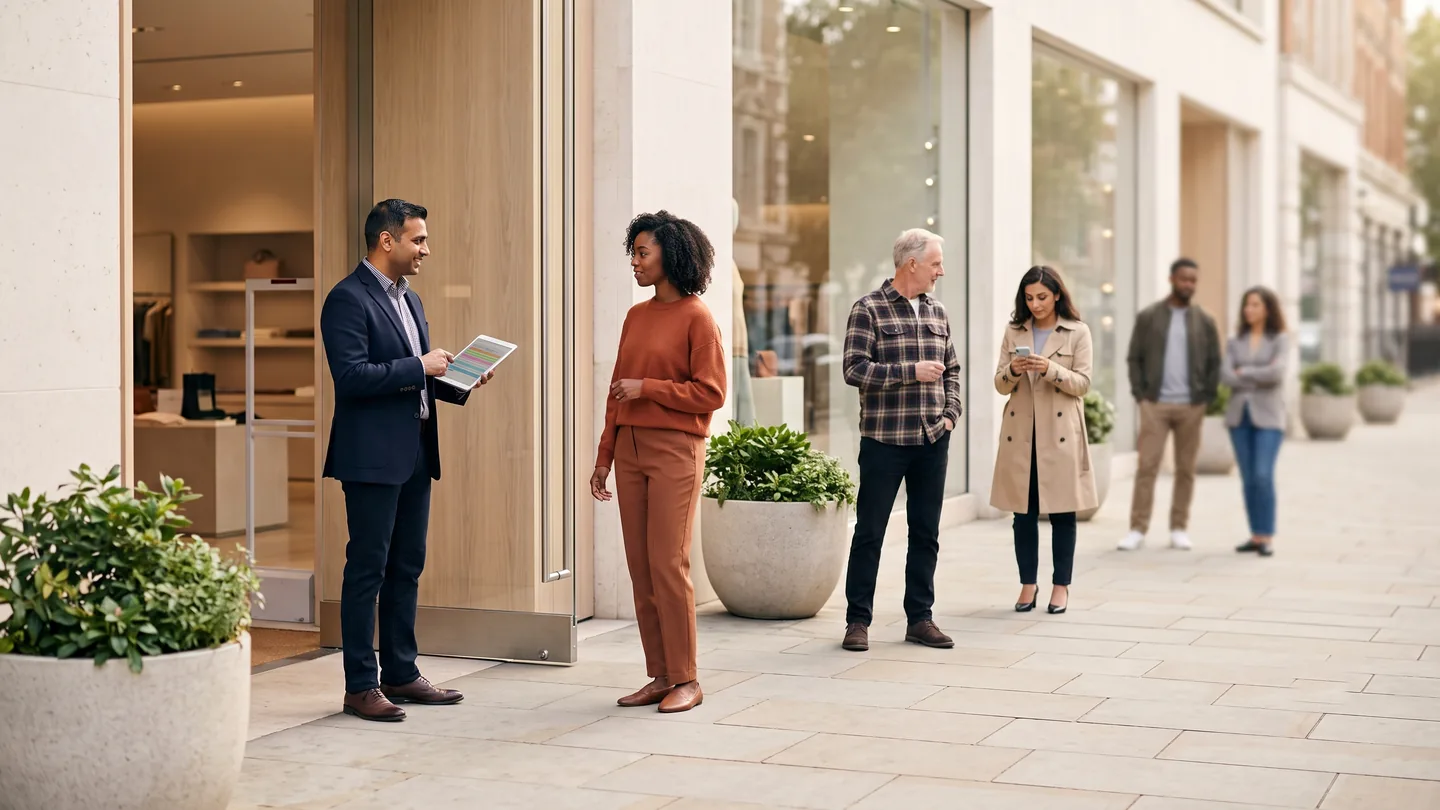

The best retail queue management software in 2026 is Booxi, the platform that turns the walk-ins a store already has into measured revenue instead of just a shorter wait. In physical retail, most foot traffic leaves without buying, and a visible line is one of the fastest ways to lose a ready-to-buy shopper who walked in prepared to spend.
Retail queue management software organizes in-store walk-ins, estimates wait times in real-time, notifies customers the moment it's their turn, and routes them to the right staff member.
This ranking covers the 11 platforms that lead retail queuing in 2026, scored on how well each one helps stores reduce wait times and convert the traffic they already have, starting with Booxi.
Best for: retail networks (20 to 1,000+ stores) that want to lift conversion, basket size, and staff utilization across every in-store interaction.
Booxi’s retail queue management software turns the walk-ins a store already has into measured revenue, not just a shorter line. It runs walk-ins, appointments, and events as one unified, multi-service queue, so store teams handle every customer from a single flow instead of stitching together separate tools. Dynamic wait-time estimation updates in real-time, VIC prioritization moves high-value clients to the front, and self check-in via QR code or URL lets a shopper join the queue and keep browsing.
A staff mobile app assigns customers and manages the floor, while live queue KPIs and analytics give headquarters the insights to act on wait times, conversion, and staff utilization across the network. That ties straight to performance: faster service and automated notifications lift conversion and basket size, which helps stores improve in-store sales without spending more on foot traffic. Booxi keeps HQ in full control while the tools stay simple for store teams, whether you run a handful of stores or an entire network
Used by Sephora, Tiffany & Co., and Dior across 103 countries, Booxi is built for retailers that want every in-store interaction measured, not just managed.
Best for: high-traffic stores that need self-service check-in via kiosk or QR.
Qminder handles walk-ins through self check-in on an iPad kiosk, a QR code, or a visitor website, then routes each customer with real-time queue updates that keep the floor moving. Its service analytics track wait times, no-shows, and staff performance across every location, so multi-store teams get a clear digital picture of how each branch performs. HIPAA-ready and SOC 2 Type II certified, it rolls out fast across new stores without a heavy IT project.
Best for: regulated, advisory-heavy retail and financial environments.
Engageware is an enterprise lobby and queue management platform built around skill-based routing, matching each walk-in to the staff member best equipped to help. That routing turns unstructured foot traffic into advisory-driven engagements and lifts staff utilization, so store operations stay efficient even when several complex services run at once. Its real strength is depth of support for consultative, appointment-heavy visits rather than fast retail throughput.
Best for: retail chains and SMBs that want an affordable, scalable tool.
Unlike the enterprise-first platforms above it, Qwaiting brings AI-powered queuing to walk-ins and appointment traffic at accessible pricing. It runs virtual queues with live wait updates, personalized notifications, and multi-language support, so customers can join remotely and track their turn from a phone. Each appointment and walk-in moves through the same queue, which makes it a practical fit for growing chains that need scale without a heavy budget.
Best for: high-volume walk-in queuing.
Waitwhile is a cloud virtual queue and waitlist built for high-traffic retail, replacing the physical line with QR, SMS, and kiosk check-in. Its real-time analytics track wait times and flow at scale, giving busy stores a live read on how fast the line is moving. It handles walk-ins and appointments, but without a native events pillar or revenue attribution, it manages the wait without measuring what that wait costs.
Best for: high-touch retail such as jewelry, banking, luxury, and telecom.
Qudini, now part of Verint, combines queuing, appointments, and events into what it calls enterprise "retail choreography." It leans on deep workforce-management and business analytics, so head-office teams can coordinate staffing and measure performance across large, multi-department operations. That depth suits complex enterprises, but it also means a heavier rollout than retail-first tools built for fast store-level adoption.
Best for: enterprises running scheduling as an IT-owned system, with roots in banking and the public sector.
Like Qudini, JRNI targets the enterprise end of the market, covering appointment scheduling, queuing, events, and analytics for global retail networks. Its ROI-focused reporting gives head office clear insights into how in-store service drives return, which appeals to large organizations that need to justify every operational investment. The trade-off is deployment: JRNI is powerful, but it's built for big global rollouts and takes longer to stand up than retail-first tools.
Best for: public-sector and banking operations that need on-premises hosting and hardware.
When sheer scale is the priority, Qmatic brings decades of customer-journey management to the table, handling billions of interactions a year across public and private sectors. It bundles queuing, virtual queuing, self-service kiosks, and scheduling, and runs either as SaaS or on-premises, so enterprises with strict hosting rules can keep everything in-house. That flexibility and proven volume make it a safe pick for large, digital-and-physical operations that span many sites.
Best for: teams that need a system adaptable to custom workflows.
Pick WaitWell when workflows won't fit a rigid template, because configurability is its main draw. The platform pairs virtual queues with AI wait-time predictions and scheduling, then opens up through an API so teams can wire it into their own stack and shape the process end to end. It stays queue-focused, though, without a native events pillar, which keeps day-to-day queuing efficient but leaves launches and VIC evenings to a separate tool.
Best for: public reception, healthcare, and banking in Europe.
ESII has spent decades on customer flow across Europe, which is why its footprint now reaches thousands of sites. The French specialist offers plug-and-play queuing through its Nova line, plus ticket dispensing, digital signage, and built-in BI that turns queue data into insights for daily operations. The kit installs with minimal setup, so reception desks and branches gain measurable efficiency without a long IT project.
Best for: businesses that prioritize scheduling and resource planning over walk-in queues.
If scheduling matters more than walk-in flow, TIMIFY fits the brief, pairing appointment booking with resource management. It combines a shared calendar, online booking, CRM, and QR check-in, so businesses can coordinate staff, rooms, and equipment around every appointment. It's more appointment-focused than pure queuing, which makes it a better fit for teams that plan services in advance than for stores managing heavy walk-in traffic.
The best retail queue management software shares a core set of features that separate a real retail platform from a basic line-ticket app. The difference isn't the ticket counter, it's whether the tools tie the wait to store performance and give head office something to act on.
The 5 key criteria below are the same lenses used to rank the list above, and they double as a decision path for choosing the right solution for a store network.
A unified queue puts spontaneous walk-ins, scheduled appointments, and group events into one flow, so store staff see every customer in a single view instead of juggling separate lists. Booxi builds this pillar into its queue and links it to appointment scheduling for retail, which lets a booked client and a walk-in move through the same system across locations and services. That shared view turns a queue from a holding pen into a coordinated service floor, where the next person is always clear no matter how they arrived.
Dynamic wait-time estimates paired with automated SMS and app notifications let shoppers keep browsing instead of standing in a line. The perception of that wait matters more than the clock: shoppers will wait about 13 minutes before being served, but abandonment tracks what they can see, so one extra person in line can raise the risk of walking out as much as an added 15 minutes.
Real-time updates are the most direct way to reduce customer wait times as they're actually felt, because a number on a phone replaces a visible queue and a longer wait still feels shorter. That mix of live estimates and alerts holds satisfaction steady and can improve the visit instead of souring it.
Unlike manual line management, digital self check-in by QR code or URL lets customers join the queue themselves, while a staff mobile app assigns each one to the right associate and keeps the floor moving in real-time.
Routing the right shopper to the right person is exactly what good retail customer experience software is built to deliver, turning a wait into a served, on-brand interaction. That pairing also matches staffing to demand at peak periods, so store operations stay efficient even when foot traffic spikes and associates aren't stuck behind a fixed counter.
Long, visible lines push ready-to-buy shoppers out the door, so the real value of queue analytics is turning that risk into something a store can see and fix. Live dashboards track wait times, abandonment, conversion, and staff utilization, giving HQ hard data and store-level insights instead of guesses about what's happening on the floor.
The stakes are concrete: 82% avoid stores with long lines, and many walk out without buying. Watching the walk-out rate for retail stores and acting on it is what turns those key KPIs into recovered sales and stronger store performance.
For a network, the real test is control across many stores at once: central HQ settings that push one standard everywhere, with room for store-level rules where a flagship or a small-format shop needs them.
The best solution also connects to the systems retail already runs, with POS and CRM integrations like Salesforce, Shopify, Lightspeed, and Cegid that tie queue data to sales and customer records.
That link is what lets head office support every location from one place and keep daily operations consistent across the whole fleet.
The best way to see what a unified queue does for a business is to watch it run across a real store network, with walk-ins, appointments, and events moving through one flow.
Booxi brings that solution to enterprise retailers that want every wait tied to revenue, not just managed, and keeps it simple for store teams on the floor. To see it in action across the network and get the support to roll it out, book a demo today.
Retail queue management software is a system that organizes in-store walk-ins, estimates wait times, notifies customers when it's their turn, and routes them to the right staff member in real-time. Many platforms also handle appointments and events in the same queue, so a store runs one flow instead of several.
Retail queue management software usually follows a per-location or per-user subscription, with enterprise plans priced to network size. Costs rise with analytics depth, integrations, and multi-location controls, so a single boutique pays far less than a chain that needs centralized management.
Yes, the strongest platforms run a unified queue that blends walk-ins, appointments, and events, while queue-only tools manage walk-ins alone. Booxi is built around that unified model, so a booked client and a spontaneous walk-in move through the same system rather than two disconnected lines.
The best retail queue management software should include real-time wait estimation, automated notifications, self check-in, staff mobile tools, queue analytics, and multi-location management with POS and CRM integrations. Together these turn a basic waitlist into a system that ties the wait to store performance.
Queue management software reduces walk-outs by removing the visible line and giving shoppers a real-time wait estimate plus the freedom to keep browsing instead of standing still. With a virtual queue and timely notifications, fewer ready-to-buy customers abandon the store before being served.
More To Explore
Best Retail Queue Management Software In 2026

Appointment Scheduling: What It Is and How It Works?
12 Retail Appointment Scheduling Software Features For Retail Stores