


A short trip to Paris and its surroundings is always an opportunity to take a closer look at the spaces shaping retail today. Even when the trip is personal, it is inevitably also a moment to observe, with a particular Booxi lens, the kind that tries to understand what actually happens when a customer pushes open the door of a physical store.
This article shares what stood out: the good, the bad, and the subjective (or not so subjective) from the ground.
Department stores are often the places that surprise the most, in the best way, because they are historic spaces that blend several codes of what experiential retail truly means. They showcase fun and unexpected campaigns that shift with the seasons, originality in merchandising, in products, in the overall atmosphere, and across every brand corner. Everything is designed to leave a lasting impression with a slightly Instagrammable edge, of course, while encouraging customers to spend as much time as possible on-site, but differently than before.
You also find the ability to book occasional events directly in-store, with QR codes to scan on the spot to register. The friction is nearly zero, the intention is there, supported by an infrastructure that plays intelligently between the digital and the physical.
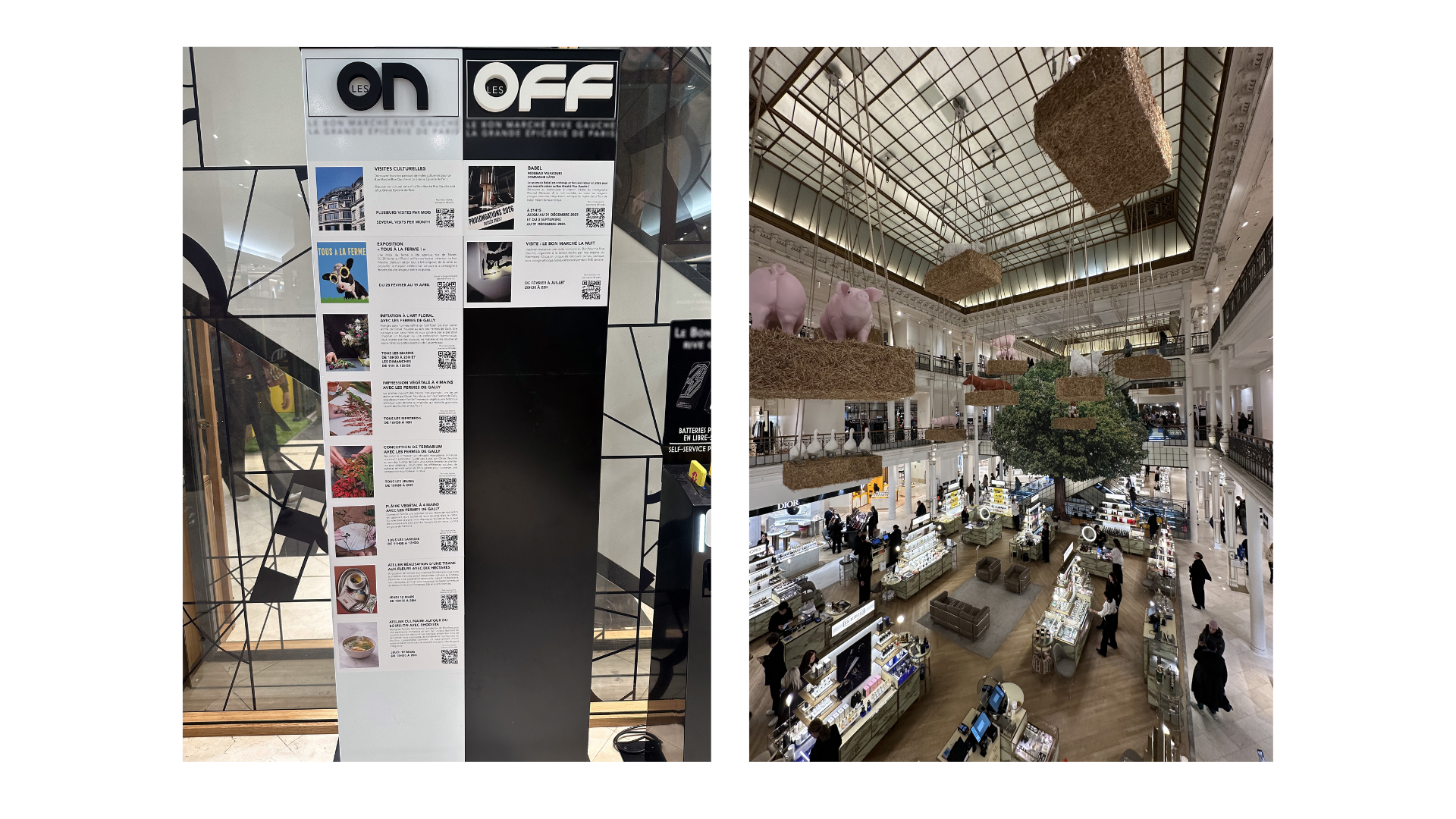
Taking a notorious parisian department store as an example: they does not host events just to check the "experiential" box on a strategy deck. They do it because they have fully understood that the store has become a channel in its own right, a space where people come as much to experience something as to buy, and where the transaction can almost become secondary when everything else is done right.
Comparing two formats of the same brand is always revealing. Taking the Diptyque corner in the same department store as an example, it is designed to focus on a carefully selected range of products. The corner goes all-in on the sensory experience with just a curated selection of candles and fragrances, in a small but central space where customers can either explore on their own or be guided by a sales advisor. Across the Seine, the flagship spans two floors and is almost built like a gallery or an art exhibition, where the goal is to let the customer take their time, understand the history and craftsmanship of the House, and live an experience that goes well beyond the product.
These are not the same role, and that is exactly how a brand can unlock its full potential: the corner seduces and intrigues, while the flagship tells the full story. Both are complementary, but only when designed as such, which is not always the case. When a corner simply reproduces in miniature what the flagship does, it loses its purpose and dilutes what makes the format powerful. And when the flagship focuses on selling without storytelling, it loses something irreplaceable: emotion.
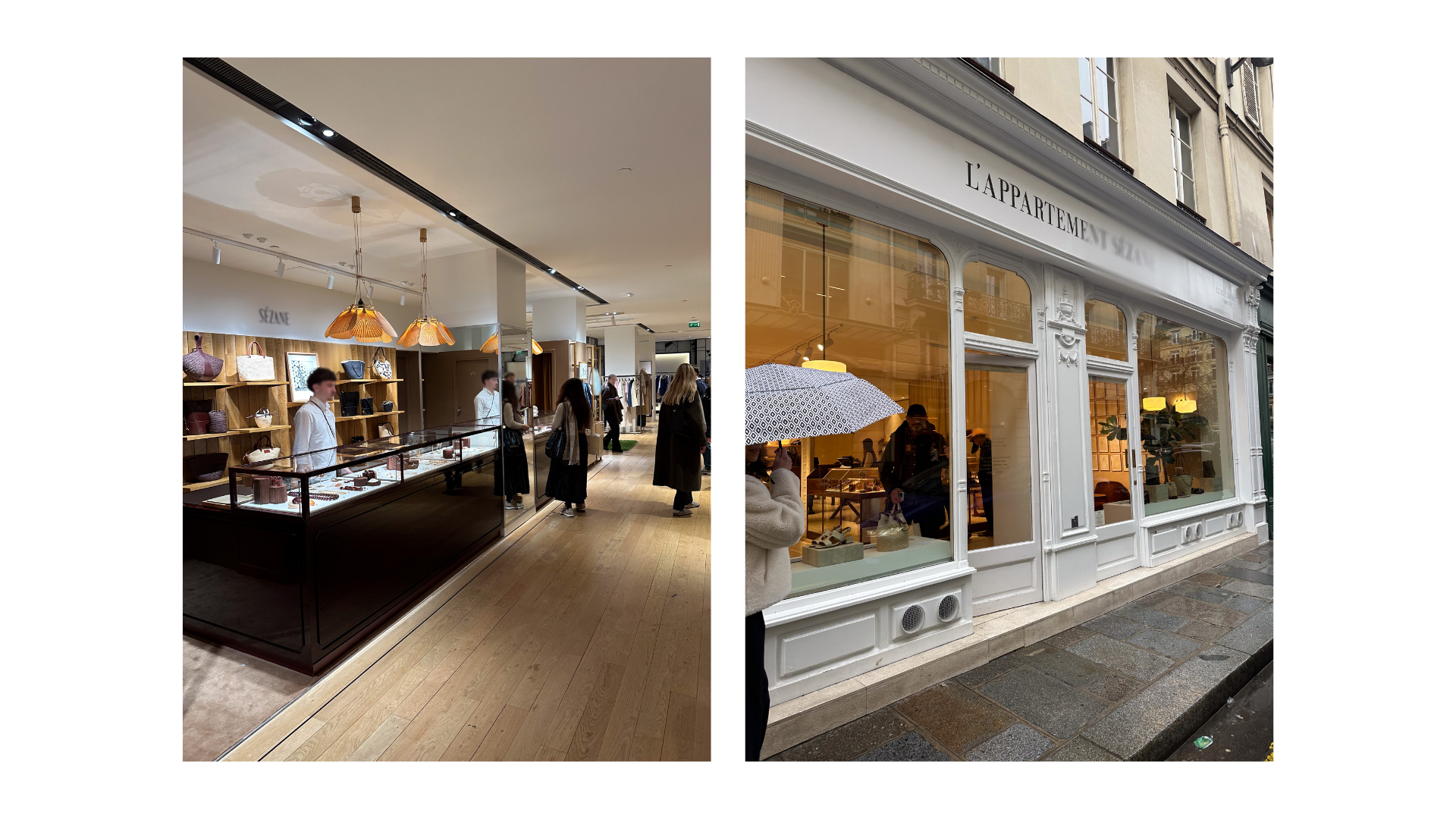
Other brands illustrate this principle by sometimes inverting the concept. "L'Appartement" from a well know french brand, is an intimate address with soft lighting, a few carefully selected pieces, but not the full collection, just enough to spark desire without overwhelming. And a short walk away, a much larger corner at the nearest department store with complementary products and broader ranges, a different footprint, a differently calibrated emotion. Same brand, same DNA, two experiences designed to respond to each other rather than repeat.
At Aroma-Zone, there were no workshops in this particular location that day (even though they do exist elsewhere), but something else worth noting: laboratory zones where customers can build their own beauty products with the right ingredients. An approach that might seem surprising at first, but is actually a well-known trend from social media: DIY. In-store, this translates into clearly defined spaces organized by ingredient type, a clear and bright journey that guides without imposing. And then, tablets to bridge the gap with the digital, allowing customers to order directly on the website if a product is not available in-store, a logic also found at other stores.
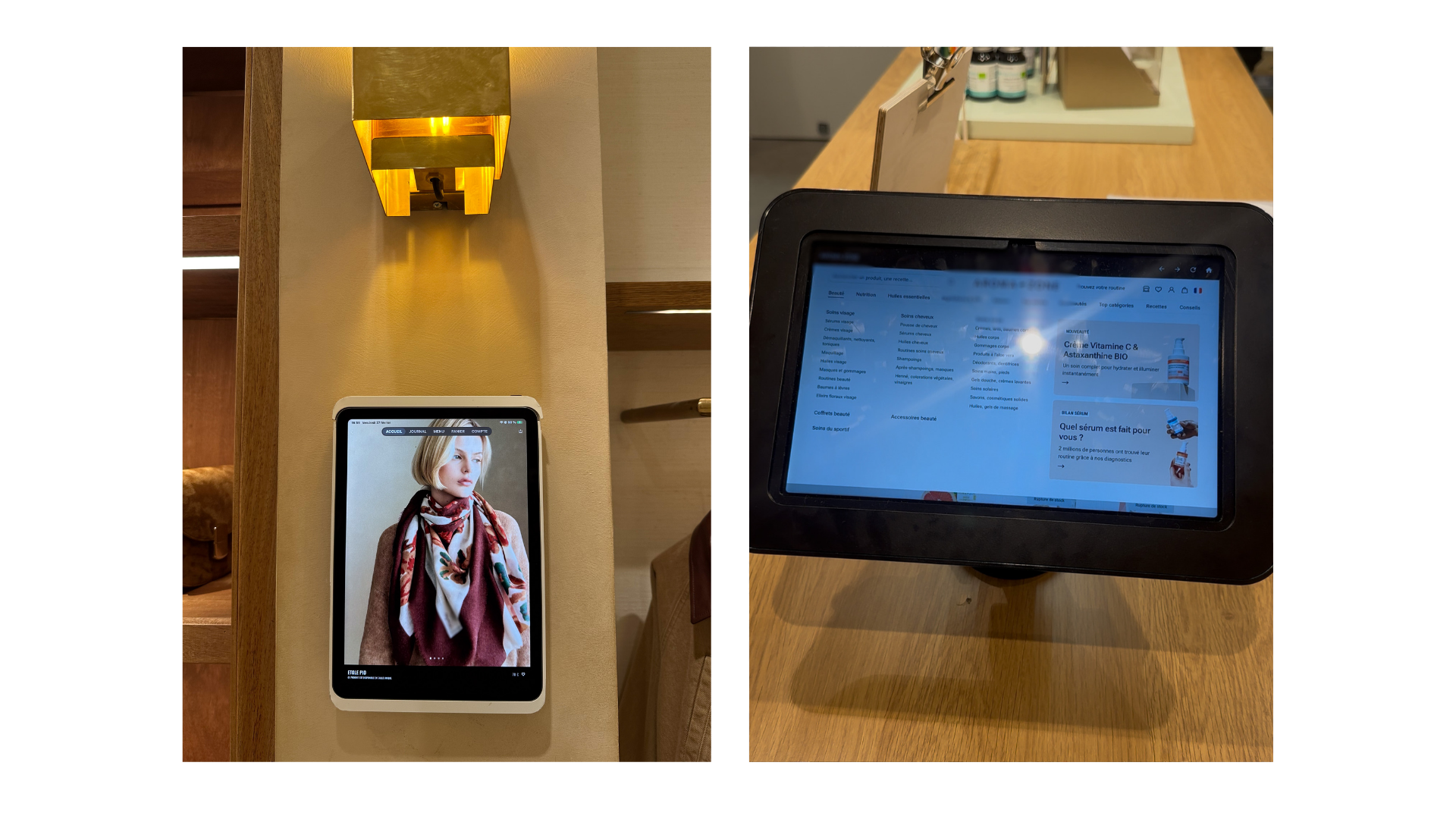
This is not an admission of stock failure: it is a promise of continuity. The customer never really leaves empty-handed or frustrated by an unmet need. They leave with a concrete intention, and the boundary between physical and digital is managed, not endured.
In some areas, there was thoughtful merchandising, well-organized and beautifully presented products, but two kinds of people were missing: both the customers and the sales advisors. No one to guide, or to create that connection that turns a visit into a purchase, and a purchase into lasting loyalty. It is the hardest observation to face squarely, one that does not help the transformation of retail, and that prevents brands from demonstrating the real benefits of going in-store versus ordering online. Especially when physical retail has never had more tools at its disposal to reinvent itself, and the means are there to redefine the experience.
The numbers on this are unsparing: 6.5 positive experiences to win back a customer after just 2.4 negative ones ¹, and 59% of consumers say they have sworn never to buy from a brand again after a single bad interaction ². An understaffed floor is a silent opportunity cost, invisible in the day's KPIs, but leaving very real traces in the customer's memory and in the brand's performance. The retailers who have failed in recent years are not those who faced economic instability: they are the ones who had not seized the opportunity to reinvent themselves for years.
This is impossible to leave out, because it is the element that makes a single moment unforgettable long after it happened.
What stands out is the interaction itself, in the moment. A sales advisor carrying the know-how of the House, a potentially young customer, and between them a simple conversation where an emotion comes through with that particular kind of authenticity that can neither be faked nor taught. A piece of advice that sounds like a genuine personal conviction rather than a product brief, and that imperceptibly transforms the sale into a memorable moment. The customer leaves with a purchase, yes, but above all with something rarer and more precious: the feeling of having experienced a moment that mattered, of having been seen in a world that loses a little more of its human face every day.
Behavioral neuroscience confirms and quantifies this: positive emotions like trust, surprise, and the feeling of being recognized activate neural circuits linked to long-term memory and brand attachment. Which perfectly explains why an emotionally connected customer spends twice as much and stays loyal far longer, even when faced with a more aggressive competing offer ³.
In luxury in particular, this dimension is foundational, because the product is a promise and the advisor is its living embodiment. According to Bain, 68% of VIC clients at a luxury house follow their advisor if they move to a new brand ⁴, which says more than any study about the real value of human connection in this sector. As the Journal du Luxe puts it: "when more than 70% of sales still pass through a human interaction, the boutique becomes a stage and the sales advisor, the last interpreter" ⁵.
Giving that interpreter the right tools, the right information before the customer arrives, and visibility into what lies ahead: that is where technology finds its natural place. Not to replace the relationship, but to make it possible at every interaction, with every advisor.
This impromptu store tour through France confirmed what we observe everywhere: the brands winning are not necessarily those with the most floor space, the biggest budgets, or even the most technology. They are the ones who have understood that the physical experience is not just another channel in a spreadsheet, but the moment of truth where everything promised online must be delivered.
A well-orchestrated event, a space where the team knows what is coming, an advisor prepared before the customer walks in, a tablet that extends the journey rather than interrupting it: these are the details that make the difference between a store someone visits once and a store they return to because they lived something there. You cannot improve what you cannot see, and what we see on the ground is that physical retail has never had more potential. It sometimes just needs the right tools to unlock everything it is worth.
Booxi supports retail brands in orchestrating their appointments, events and queue management. Explore our success stories
¹ Adobe / Medallia Market Research, Digital Customer Experience Trends 2024 - https://www.medallia.com/fr/blog/digital-customer-experience-trends/
² Observatoire des Services Clients 2024, BVA Xsight - https://cxadvisor.fr/statistiques-experience-client/
³ Harvard Business Review, 2024, cited in Dynamique Mag - https://www.dynamique-mag.com/article/fideliser-vos-clients-en-2025-les-nouveaux-challenges-de-la-confiance
⁴ Bain & Company, cited in Unity Marketing / CXG The Advisor Effect, 2024 -https://unitymarketingonline.com/retail-labor-crisis-is-headed-for-luxury-brands-in-2025/
⁵ Journal du Luxe, interview Samantha Larsen Mellor - https://www.journalduluxe.fr/fr/interview/samantha-larsen-mellor-tolduntold
More To Explore
Physical Retail, at Its Best and at Its Worst

Retail Radar 2026: The Customer Journey Starts Before They Walk In

Creating More Human Retail Experiences in the Digital Age