


Over the past few months, we have truly been on the ground. A lot. Across verticals: luxury, beauty, eyewear, pet retail, fashion, sport. We walked the floor, watched how teams operate, noticed the moments that matter, the welcome, the experiences, the dead zones. In other words, we paid attention to what consumers actually experience when they walk through a store door on an ordinary Tuesday afternoon.
The insights we brought back are not a simple trend report. It is a structural observation the numbers confirm and the field makes hard to ignore: the store keeps changing its role, and very rapidly, but most retailers have not necessarily changed their day-to-day operations.
64% of Gen Z consumers prefer to shop in-store rather than online ¹. The generation so often framed as digital-first actually holds the strongest preference for physical retail of any age group. More than two thirds of them visit a store at least once a week ².
But the same data carries a clear warning. 70% of consumers say they will abandon a brand after just two negative experiences, and nearly one in four after only one ³. According to PWC, buyers are willing to pay a premium of 13 to 18% for an experience that justifies it ⁴.
The opportunity is real. So is the risk. And between the two, there is no vision problem. There is an execution problem.
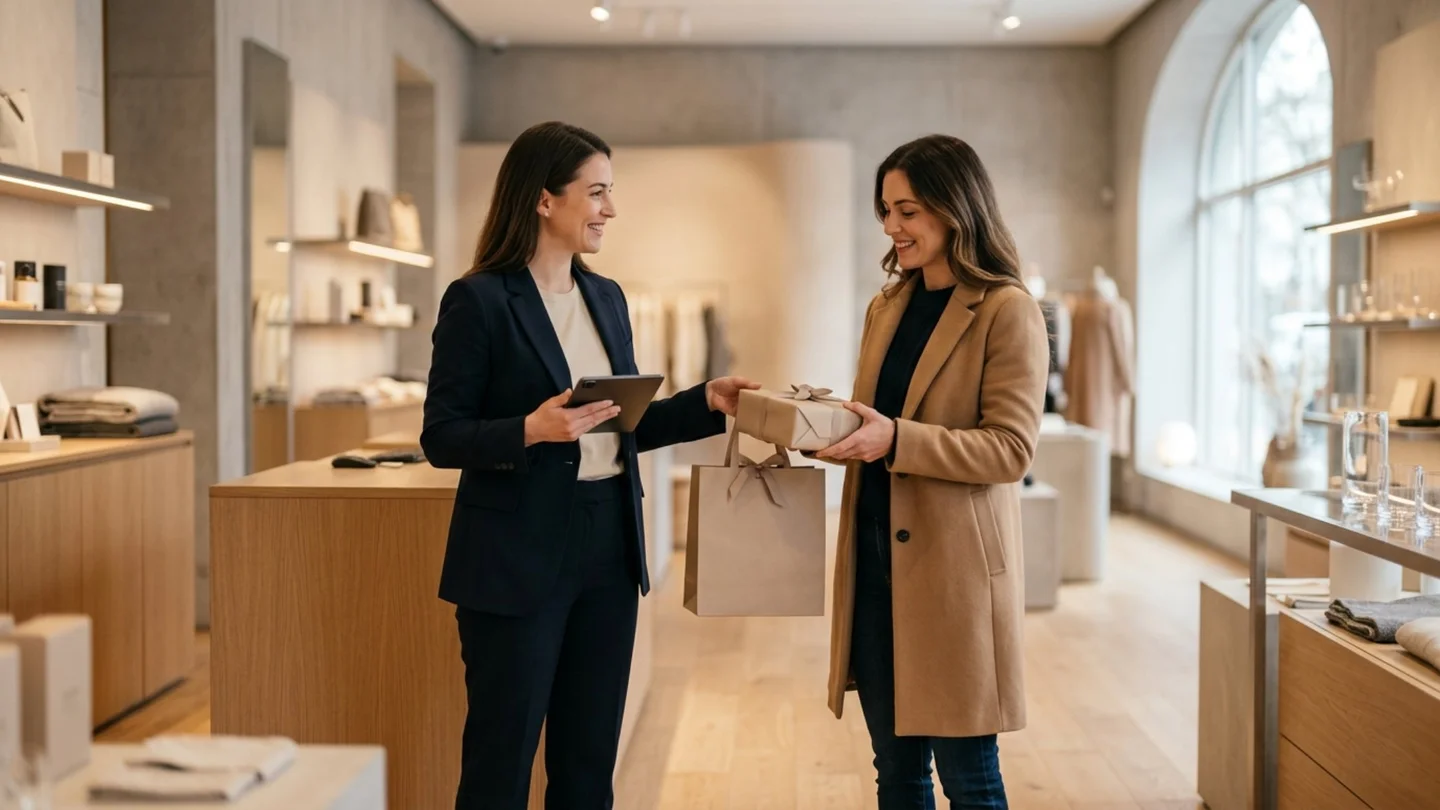
Most luxury houses offer interactions that feel natural and anticipated. The client feels expected. The team already knows what they are looking for, and above all how to make the visit feel effortless so the sale never feels like a sale.
The recurring problem is that, for most brands, this quality of preparation still depends largely on the individual advisor, without the support of today's tools. An experienced consultant delivers a remarkable experience. Their colleague, in the next boutique, improvises. At the scale of an international network, this necessary dependence on people without infrastructure can sometimes weaken the strategy and the mark of authenticity, despite extensive training.
What it calls for: an invisible and complementary technology system that makes preparation easily possible for everyone, not just the most experienced, not to replace the advisor, but to give them, before each appointment, the information they need to do their job even better.
76% of consumers say they are willing to pay more for a personalized experience ⁵. Among beauty consumers in particular, personalization has become a purchase criterion in its own right and a genuine loyalty driver.
But personalization in beauty suffers from a recurring misunderstanding: brands invest in the sensory dimension of the experience, the testers, the treatment rooms, the trained advisors, without resolving the upstream question. Who is coming? Why? With what intention? When you do not know what is arriving, personalization remains a surface-level promise, well executed for some, absent for others.
Real personalization starts before the customer walks in. And that is not only a question of in-store entertainment. It is a question of anticipation, forecasting, and organization with the best tools that respect day-to-day operational constraints.
In eyewear retail, appointment booking is now widely adopted. The brands that invested early have proven the value of the model: better retention, higher conversion rates, larger basket sizes, better in-store adoption, and above all less time spent on the critical steps of the sale for teams.
But a new tension has emerged. The data generated by these appointments, frequency, reason for visit, duration, satisfaction, often remains siloed. It does not always reach network managers, and sometimes even less so at the local level. It does not feed operational decisions. Booking produces data. The data does not always produce insights that are truly concrete and tied to business outcomes.
This is the next maturity level for eyewear retail: moving from activation to real measurability. The tools exist. The question is knowing which is the best on the market to enable this performance gain if the organization is ready to act on them.
Pet retail stacks what no other format combines: grooming, veterinary care, self-wash stations, training classes, sometimes all under one roof, with tight time slots, specialized teams, and customers whose anxiety can become very real when something goes wrong.
The challenge is not offering these services. It is orchestrating them properly. A grooming session running late cascades into a vet consultation. A last-minute cancellation leaves a slot empty that another booking could have filled. Manual management hits its limits fast in this context.
The brands succeeding here are not necessarily the ones offering the most services. They are the ones that have built the infrastructure to manage complexity without transferring it onto the team or the customer.
The most active fashion and sport brands have turned their stores into community spaces: group classes, product launches, themed events, coaching sessions. The product is present, but it is no longer the only reason to show up.
This shift in model creates a new operational requirement. A poorly managed event, lost registrations, an overcrowded room, a team that was not briefed, damages the brand just as much as a bad sales interaction. And unlike a failed transaction, it is visible, shared, commented on.
Managing in-store events with the same tools as a shared calendar is no longer sufficient, and most teams already know it.
This is the takeaway from these past months on the ground. 7 in 10 retail executives plan to deploy AI capabilities within the year to personalize experiences ⁶. The technology investment intent is clearly there.
But investing in tools without building the habits to use them is like buying a professional kitchen without training the cooks. Technology only creates value when it is connected to the daily execution of teams, and when those teams have the right tools to do their job well.
The real lag in most retail organizations is not a lack of tools. It is a lack of operational clarity, the right tools, and the right technology partners who will understand their day-to-day challenges.
Knowing what is coming, who is ready, what customers experienced, and how to turn that into decisions. That is the standard taking shape.
What we observe is not a return to grace of physical retail. On the contrary, it is a redefinition of its role.
The store is experiential. It is social, emotional. It is service-driven. And it remains at the heart of a successful omnichannel strategy for the brands treating it as such: as an asset to be managed, not a flow to be endured.
You cannot improve what you cannot see. The retailers pulling ahead have built systems to observe what customers actually experience, anticipate what teams actually need, and give those teams the right tools to act on signals rather than instincts. That is what Booxi works to make possible, for brands that treat physical retail as a genuine competitive advantage.
That is the standard. And the gap between the brands that meet it and those that do not is growing faster than most organizations realize.
See how retail brands across luxury, beauty, eyewear, pet and sport have transformed their customer experience with Booxi. Explore our success stories
¹ L.E.K. Consulting, Generational Shopping Behavior, 2024 - https://www.lek.com/press/nearly-two-thirds-gen-z-prefer-store-shopping-online-new-study-finds
² RetailNext, Consumer Survey, August 2024 - https://retailnext.net/
³ Emplifi, The Social Pulse: State of Consumer-Brand Engagement, 2025 - https://emplifi.io/press/emplifi-reveals-70-of-consumers-will-abandon-a-brand-after-just-two-negative-experiences/
⁴ PwC Experience is Everything - https://www.pwc.com/us/en/advisory-services/publications/consumer-intelligence-series/pwc-consumer-intelligence-series-customer-experience.pdf
⁵ Beautyque NYC Insights, 2025 - https://www.beautyque.nyc/blogs/beautyqinsiders/the-future-of-beauty-retail-5-trends-shaping-2025
⁶ Deloitte Retail Industry Outlook, 2025 - https://www2.deloitte.com/us/en/insights/industry/retail-distribution/retail-industry-outlook.html
More To Explore
BOPIS in Retail: What Is It & How It Works

Physical Retail, at Its Best and at Its Worst
Retail Radar 2026: The Customer Journey Starts Before They Walk In